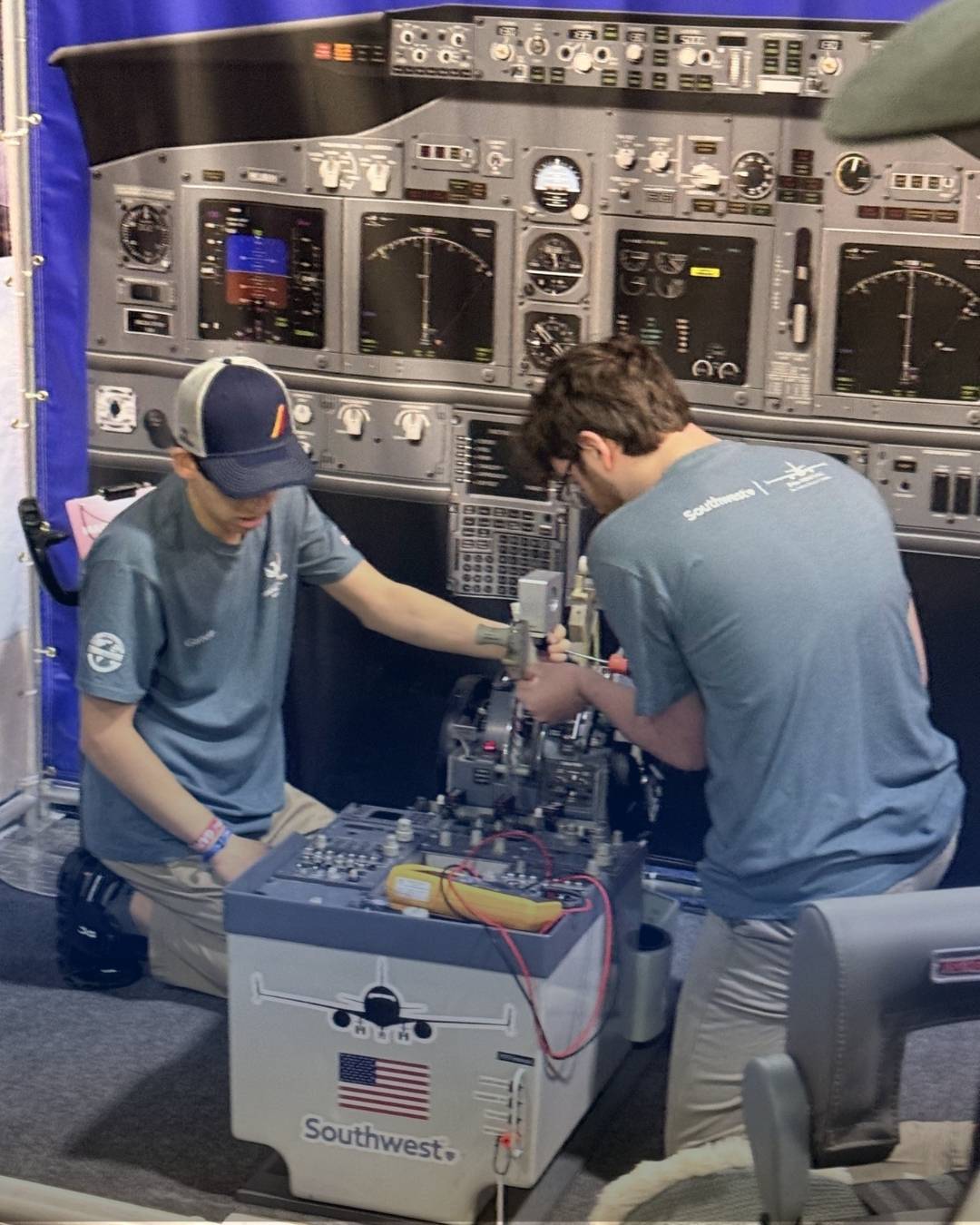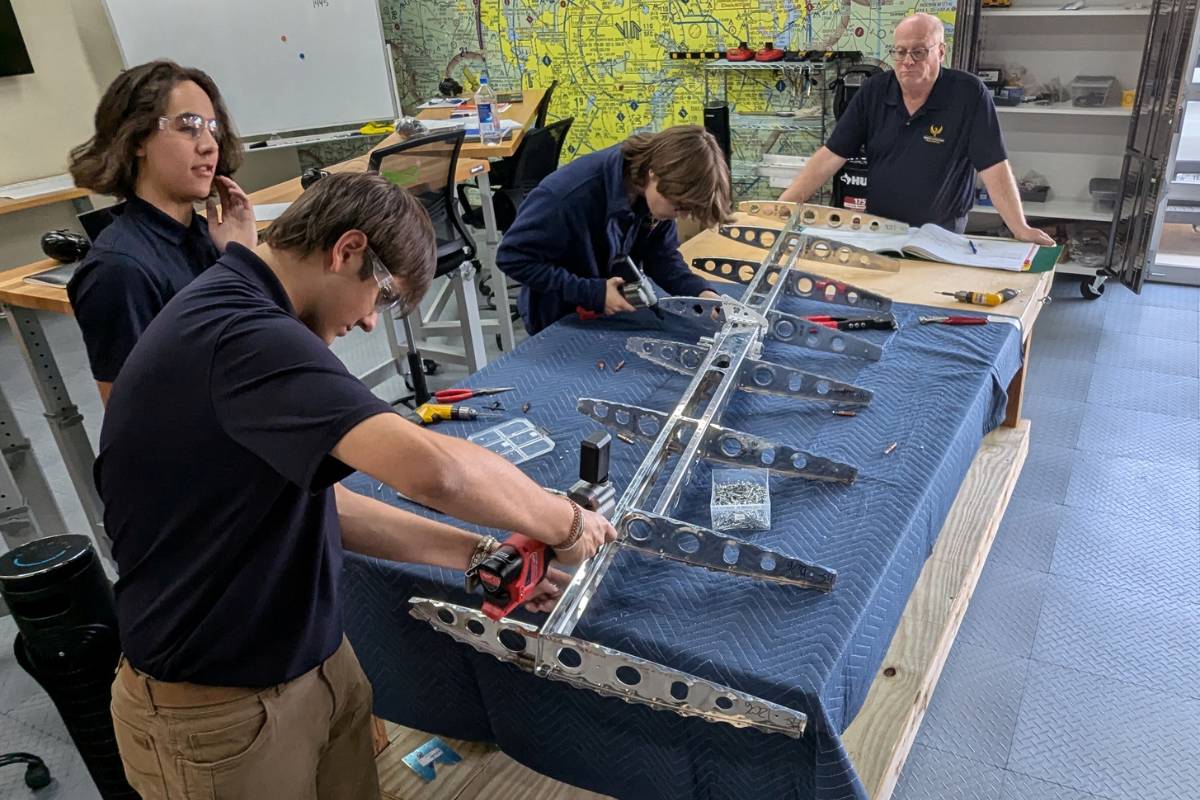
The question comes up at almost every information session Rising Aviation holds for prospective families. A parent raises their hand, or pulls an admissions staff member aside afterward, and asks some version of the same thing: “This all sounds great, but will a CTE school hurt my kid’s chances of getting into college?”
It is a fair question. It is also, in most cases, based on a misunderstanding of how college admissions actually works today and what Career and Technical Education programs actually produce.
The short answer is no, CTE does not hurt college admissions.
For students applying to aviation programs, engineering schools, or technical universities, a well-executed CTE background can make an application considerably stronger than a traditional academic record alone.
The longer answer requires pulling apart a few assumptions that tend to drive the concern in the first place.
Where the Concern About CTE Comes From
The concern about career and technical education and college admissions has a legitimate historical root. For most of the twentieth century, vocational education in American high schools operated on a separate track from college preparation.
Students were sorted early, often based on socioeconomic factors, into either the academic path or the vocational path.
The vocational track prepared students for trade jobs and largely closed off the option of a four-year college degree.
That model is gone. Modern CTE programs are built on a fundamentally different foundation. They are designed to run alongside rigorous academic coursework, not replace it.
Students in a well-structured CTE program vs traditional high school take the same core academic subjects required for graduation and college admission.
What changes is what fills the rest of their schedule and what they have to show for it when they graduate.
The parents asking about college admissions are often picturing the old model. The programs their teenagers are considering look nothing like it.
What the Research Actually Shows About CTE & College Readiness
The data on CTE and college readiness is consistent, and it cuts against the concern rather than confirming it.
Research from the Association for Career and Technical Education found that students who take both CTE coursework and college preparatory courses are better prepared for college and careers than students who take only college prep.
Not equally prepared.
Better prepared.
The combination produces stronger outcomes than either path alone.
A California study tracking students in CTE-integrated academies found that those students were significantly more likely to complete the coursework required for admission to California’s public universities than their peers in traditional programs.
The CTE students were also more likely to enroll in college and, once enrolled, less likely to drop out in the first year.
The National Center for Education Statistics reported in 2024 that among high school graduates who went on to postsecondary education, CTE concentrators earned bachelor’s degrees at a slightly lower rate than non-concentrators overall, 48% compared to 54%.
That gap sounds concerning until you look at what is behind it. A meaningful portion of CTE graduates enter the workforce directly or pursue associate degrees and technical certifications that align with their career goals.
The students who chose college went at roughly the same rate as their peers. The ones who did not were often following a deliberate plan, not a closed door.
How Admissions Officers Actually Read CTE Applications
The college admissions landscape has shifted considerably in the past decade.
At most schools outside the most selective tier, the question admissions officers are asking is not whether a student took a traditional academic path. It’s whether the student has demonstrated genuine interest, practical commitment, and the capacity to succeed in college-level work.
CTE credentials speak directly to all three of those things.
An industry-based certification earned in high school tells an admissions officer that a student pursued a real credential, sat for a real exam administered by a real industry body, and met a standard that exists outside the school’s own grading system.
That is meaningful evidence in a way that a GPA, which varies enormously from one school to another, cannot fully replicate.
Admissions consulting platform CollegeVine puts it plainly: admissions committees appreciate applicants who engage with their interests in a meaningful way. A student who has spent their high school years working toward a pilot certificate or building an aircraft from a kit has a story to tell that very few applicants can tell.
At selective programs that emphasize fit to a specific major or field, that story is an advantage rather than a liability.
The admissions landscape as a whole has moved toward what some counselors call narrative coherence.
Colleges increasingly want to see that a student’s academic choices, activities, and goals point in a consistent direction.
A teenager who chose an aviation high school, earned their private pilot certificate, and is now applying to Embry-Riddle or a similar program has about as coherent a narrative as it is possible to construct. The application writes itself.
The Specific Case of Aviation Programs
For students targeting aviation-focused universities, CTE preparation does not just avoid hurting applications. It often creates a structural advantage.
Embry-Riddle Aeronautical University, consistently ranked as the top aviation and aerospace university in the United States, accepts roughly 65 to 68% of applicants depending on the campus. It is moderately selective, values strong academics, and looks favorably on demonstrated engagement with aviation.
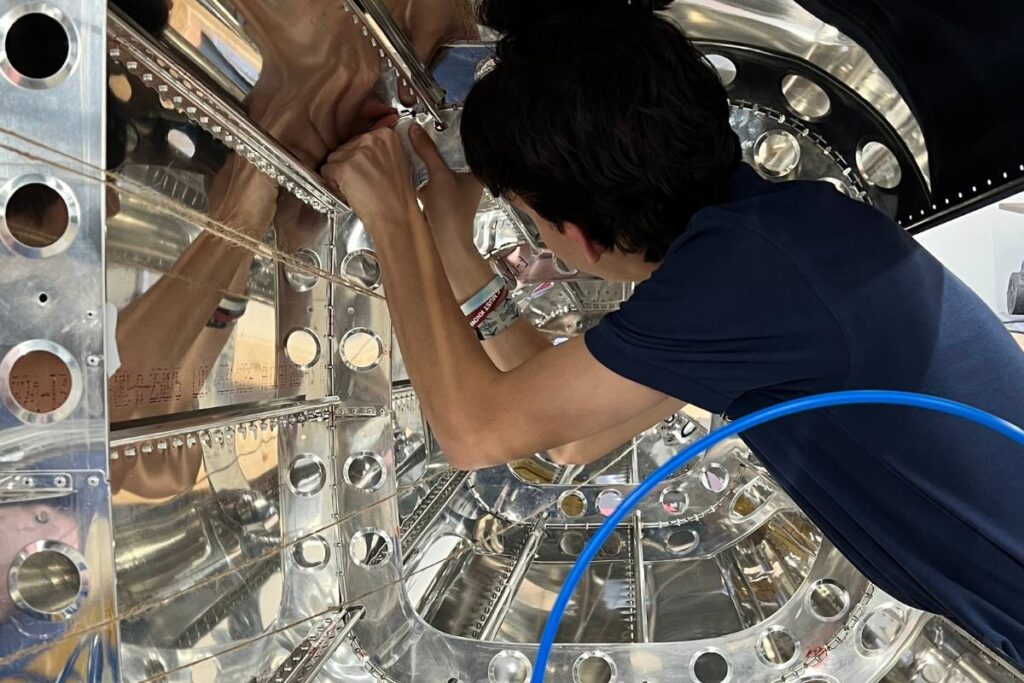
A student arriving with logged flight hours, a private pilot certificate, and technical experience in aircraft maintenance or avionics is not presenting a weaker application than a traditional high school graduate. They are presenting a more relevant one.
The same logic applies to aerospace engineering programs, aviation management degrees, UAS programs, and related fields at universities across the country.
These programs want students who already understand what they are walking into. CTE experience is evidence of exactly that.
What About Highly Selective Universities?
This is where the honest answer requires some nuance, because the concern is not entirely without basis at the highest end of the admissions spectrum.
At schools like MIT, Stanford, or the Ivies, where acceptance rates now sit below 5%, every element of an application is scrutinized intensely. The academic preparation requirements at these schools are demanding, and students typically need strong AP or IB coursework, high test scores, and a transcript that demonstrates academic rigor across a broad range of subjects.
A student at a CTE high school applying to one of these programs needs to make sure their academic record is genuinely competitive.
If a CTE program comes at the expense of rigorous academic coursework, that is a problem for highly selective admissions. If the academic work remains strong and the CTE experience adds a compelling and distinctive dimension to the application, it can be an asset even at this level.
The practical reality is that most families asking about CTE and college admissions are not primarily targeting schools with sub-5% acceptance rates. They are thinking about good universities where their teenager can build a career in a field they care about. For those families and those schools, CTE is not a liability.
The Dual Enrollment Factor
One of the most direct ways CTE programs address the college readiness question is through dual enrollment, and it is worth spelling out what that actually means in practice.
Dual enrollment allows high school students to take college courses and earn college credit while still in high school. Many CTE programs in Texas, including those accessible to Rising Aviation students, offer dual enrollment pathways with community colleges and universities.
A student who arrives at college with 12 or 15 credit hours already completed is well ahead of their peers.
This matters practically in two ways. First, it demonstrates to college admissions officers that the student has already handled college-level academic work. Second, it reduces time and cost to degree completion, which is a real financial consideration for families evaluating whether a CTE path makes sense.
The Embry-Riddle Pathway at Rising Aviation
Rising Aviation has a formal relationship with Embry-Riddle Aeronautical University that creates a structured transition from high school to one of the most respected aviation programs in the country.
Students who complete the RAHS program with strong academic records are positioned to apply to Embry-Riddle with a profile that aligns directly with what that university values.
This is not a vague encouragement to apply. It is a documented pathway that reflects the intentional alignment between what RAHS teaches and what Embry-Riddle expects of incoming students in its aviation programs.
For families who came to RAHS specifically because they want their teenager to have a serious aviation career, this pathway answers the college question concretely. The concern is not that their child will have trouble getting into college. The concern should be whether they are making the most of the opportunity in front of them.