Texas high school students interested in aviation have three primary options: public school CTE aviation electives embedded in a traditional campus schedule, district-run career institute programs that pull students from their home campuses for part of the day, and dedicated aviation CTE schools like Rising Aviation High School in Addison where every student is enrolled specifically because of the aviation program.
The depth of training, the credentials students can earn, and the amount of time spent on actual aviation work differ substantially across these formats. For students who want the most immersive experience and the strongest credential outcomes, a dedicated aviation school is a structurally different proposition from a career institute elective.
Why the Format of a CTE Program Matters as Much as Its Name
The Texas Education Agency (TEA) organizes CTE under 16 federally defined career clusters. Aviation falls under the Transportation, Distribution, and Logistics cluster, with approved programs of study covering aviation pilots, aviation maintenance, and drone operations. Every Texas public school district can offer courses in these programs of study, and many do.
But offering a CTE course and building a school around aviation are not the same thing. A student who takes one aviation elective per semester at a comprehensive high school alongside a conventional academic schedule is having a fundamentally different experience from a student who spends their entire school day in an aviation-focused environment. The TEA framework defines what courses can be offered. It does not determine how seriously any individual school treats them.
Understanding the different formats available in Texas helps families ask the right questions rather than stopping at the label “aviation CTE.”
Format 1: CTE Aviation Electives at Comprehensive Public High Schools
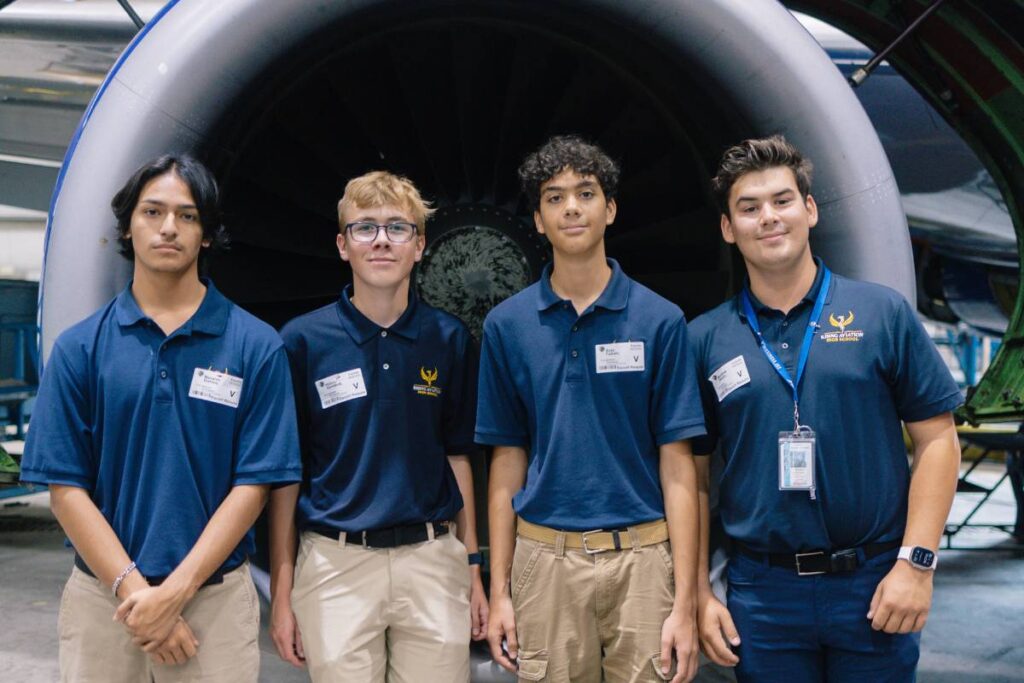
The most common form of aviation CTE in Texas is a course or two embedded in an otherwise conventional high school schedule. Under the Texas Foundation High School Program, students must earn credits in a CTE sequence to satisfy endorsement requirements. Many comprehensive campuses offer aviation-related electives within the Transportation, Distribution, and Logistics career cluster to meet this demand.
In practice, these programs vary widely.
A well-resourced district might offer a multi-year aviation sequence with flight simulation equipment and industry partnerships.
A less-resourced campus might offer a single introductory course that surveys aviation careers without any hands-on technical component.
The TEA framework establishes course standards through Texas Essential Knowledge and Skills (TEKS), most recently updated for aviation maintenance in April 2024 with new TEKS effective August 2025. However, TEKS define what students should learn, not the quality or depth of how it is taught.
For a student who is casually curious about aviation and primarily focused on a traditional academic path, an elective or two at a comprehensive campus may be sufficient exposure. For a student who wants to earn a federally recognized aviation credential before graduating, a single elective course is not designed to deliver that outcome.
Format 2: District Career Institutes
Several large Texas school districts have invested in standalone career institute campuses that offer more concentrated CTE programming than a typical high school can provide. In the Dallas-Fort Worth metro, Dallas ISD operates the most prominent example.
Dallas ISD Career Institutes currently operate at Career Institute North and Career Institute South, with a third campus, Career Institute West, set for completion in 2026.
The aviation pathway at CI North and CI South is a four-year program covering flight operations, aircraft systems, and aviation career pathways. Students attend their home high school for most of the week and travel to a career institute on block schedule days, typically two days per week, for CTE instruction.
Dallas ISD’s aviation program uses flight simulators and is designed to give students who have never set foot in an aircraft a meaningful introduction to aviation as a career field.
According to Dallas ISD, the program exposes students to pathways including pilot, flight attendant, aircraft technician, and air traffic controller.
Northwest ISD’s V.R. Eaton High School operates an Aviation and Aeronautics Academy as an embedded program within a comprehensive high school.
The academy offers three tracks: aviation maintenance, drone (unmanned pilot), and manned flight. Upper-level students in the private pilot pathway take dual credit courses through Tarrant County College (TCC) and are required to pass the FAA Private Pilot Knowledge Test administered in their senior year. The maintenance track includes dual credit TCC coursework in junior and senior years.
These career institute and academy programs represent a meaningful step up from a single elective.
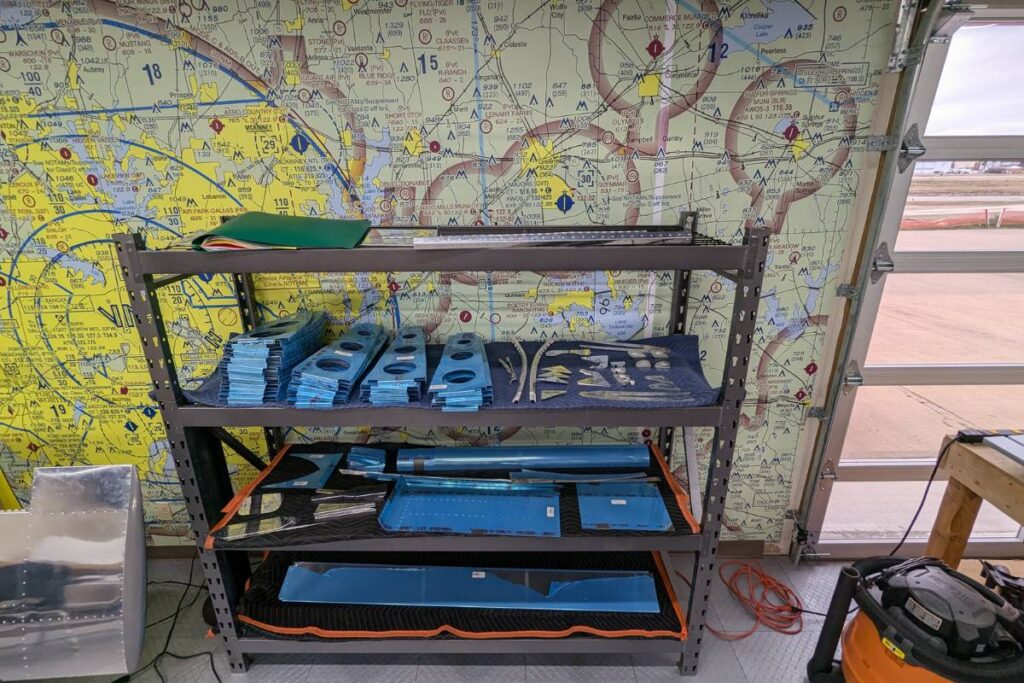
Students receive more contact hours, more specialized instruction, and in some cases dual credit opportunities. The trade-off is that the program competes for schedule space with a student’s home campus obligations. A student attending a career institute two days per week is still spending the majority of their school week in a conventional academic environment at a different campus.
Format 3: Dedicated Aviation CTE Schools
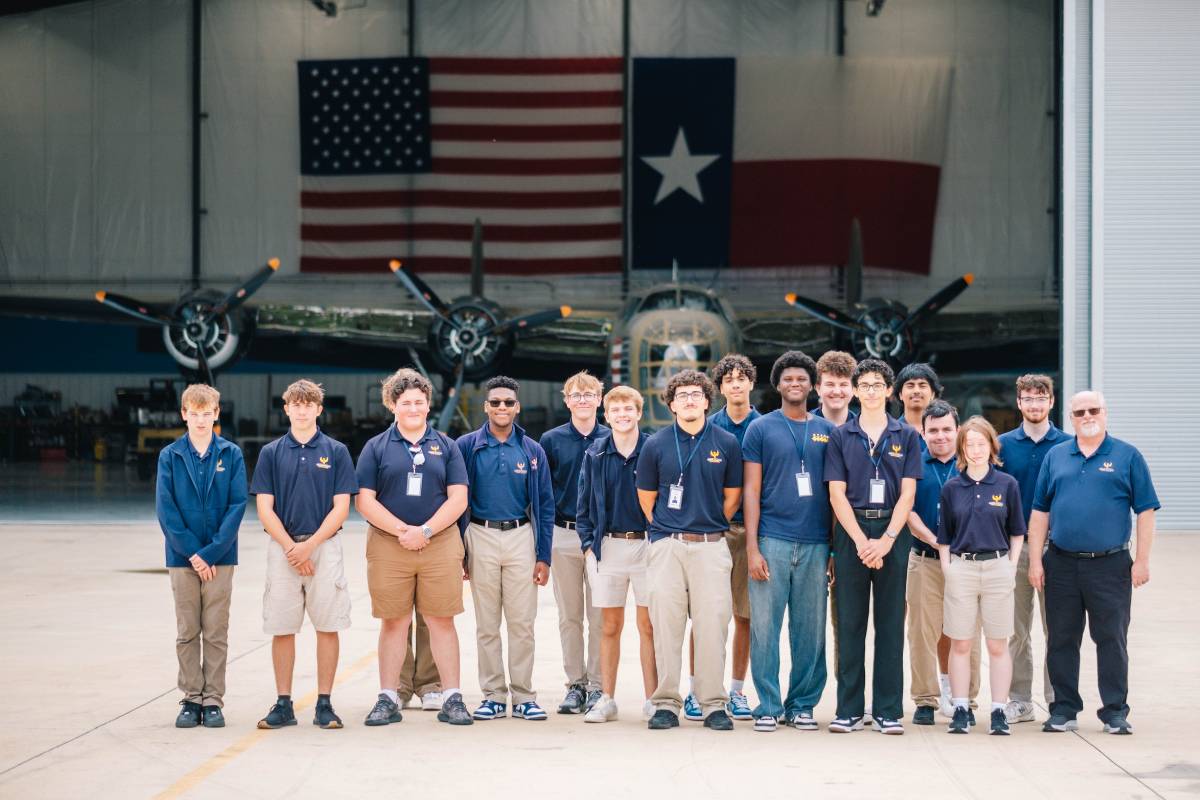
A dedicated aviation CTE school is one where every enrolled student is there specifically because of the aviation program, where the entire schedule is organized around aviation education, and where students are not splitting time between a home campus and a career facility.
This format is rare. Outside of a small number of specialized programs nationally, very few high schools are built entirely around aviation. In Texas, Rising Aviation High School in Addison is the primary example of this model.
What Rising Aviation High School Offers
Rising Aviation High School (RAHS) is a private, accredited CTE high school located at Addison Airport (KADS), 15506 Wright Brothers Drive, Addison, TX 75001. The school is accredited through TEPSAC (Texas Private School Accreditation Commission) and MSA-CESS, and participates in the Texas Education Freedom Accounts (TEFA) program, making it eligible for state funding of $10,474 per student for the 2026-27 school year.
Students at RAHS choose from three tracks.
The Fixed Wing Pilot Program partners with Thrust Flight, an FAA Part 141 flight school also based at Addison Airport, to provide actual flight training toward the FAA Private Pilot Certificate under 14 CFR Part 61. Students log real flight hours in real aircraft with FAA-certificated flight instructors, not simulator time counted as flight experience.
The Drone Pilot Program prepares students to earn the FAA Part 107 Remote Pilot Certificate, the federal credential required for commercial drone operations.
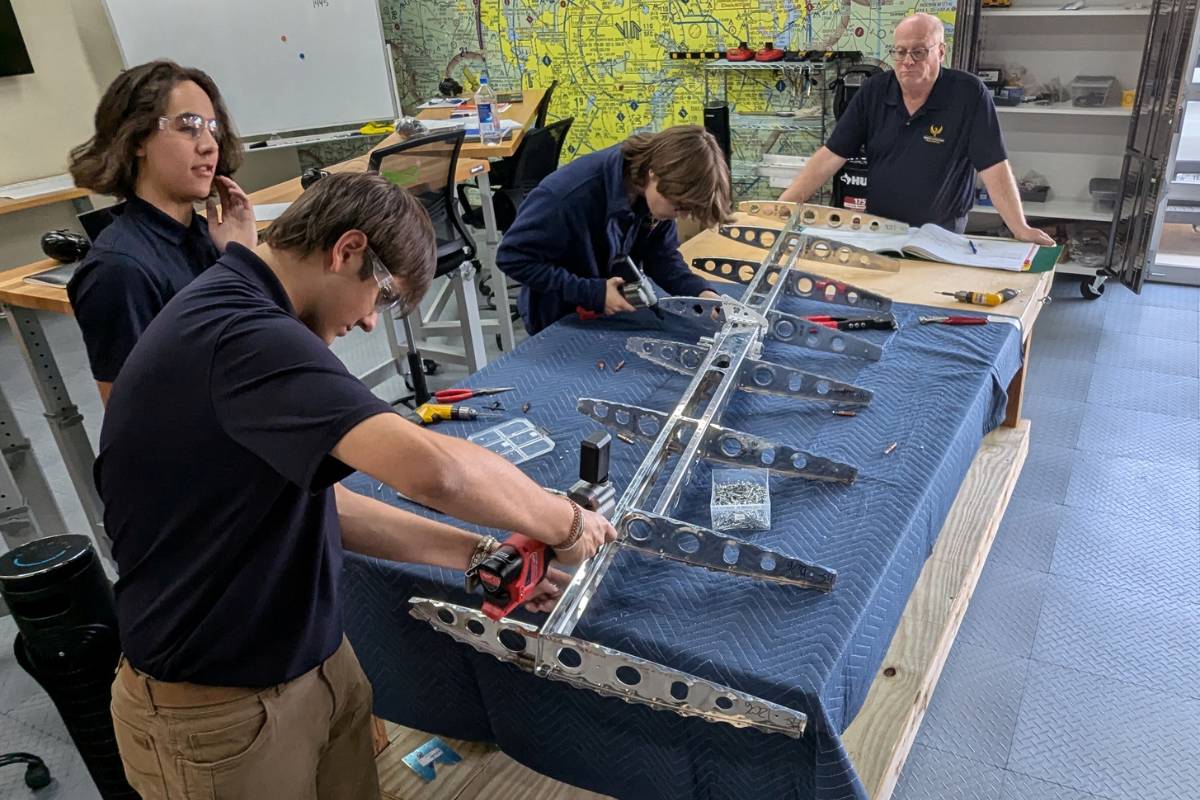
The Aircraft Maintenance Technology (AMT) Program provides foundational training toward the FAA Airframe and Powerplant (A&P) Certificate under 14 CFR Part 65, including hands-on work on the school’s ongoing Van’s RV-12 aircraft build, a real light-sport aircraft being constructed by the current student cohort.
Academic coursework at RAHS is built on a STEAM model (Science, Technology, Engineering, Aviation, and Math) and organized around a mastery-based advancement structure rather than a fixed seat-time calendar.
The school’s hybrid learning model, introduced for the 2025-26 school year, allows students to complete core academic courses through an online learning management system called Edgenuity while attending campus for in-person aviation instruction.
Required on-campus time includes one designated aviation-instruction day per week for pathway students, plus mandatory Friday sessions featuring guest speakers, industry excursions, and aviation enrichment. Students who prefer full in-person learning can use the on-campus learning lab during morning and afternoon sessions.
RAHS has an Embry-Riddle Aeronautical University pathway for students targeting the country’s top aviation university, ranked number one in aviation and aerospace by U.S. News and World Report.
How the Three Formats Compare
The differences between formats are not primarily about quality of instruction within each program. They are structural, and structure determines outcomes.
Time on aviation. A student in a comprehensive high school elective might spend 45 to 90 minutes per day on aviation coursework during the semester in which they take it. A career institute student attends aviation programming roughly two days per week. A large portion of an RAHS student’s academic environment, including how academic subjects are framed, is organized around aviation for the full school year across all four high school years.
Credentials earned. Aviation electives at comprehensive campuses typically prepare students for introductory industry certifications, if any.
Career institute programs like the NISD V.R. Eaton Aviation Academy require students to pass the FAA Private Pilot Knowledge Test by senior year, which is a meaningful benchmark but not the same as earning the certificate, which requires logged flight hours and a practical checkride.
RAHS students in the fixed wing program work toward earning the full FAA Private Pilot Certificate before graduation, which requires a minimum of 40 flight hours under 14 CFR Part 61, a written knowledge test, and an FAA practical exam administered by a Designated Pilot Examiner (DPE).
Students in the maintenance program work toward foundational A&P readiness rather than the certificate itself, which requires a minimum age of 18 and completion of an FAA-approved Part 147 AMTS program.
Cost. Public career institute programs are tuition-free for students enrolled in participating school districts. RAHS tuition is $11,950 per year before TEFA or other financial aid. For families who receive TEFA funding, the net cost drops to approximately $1,476 per year. For families who do not, the school’s admissions team can discuss institutional scholarships and payment options.
Environment. Career institutes and comprehensive campus programs serve students with a wide range of interests and goals, many of whom are not committed to aviation careers. RAHS students are all there for the same reason. The cohort effect of a school where every peer chose aviation creates a different social and academic dynamic than a program that shares hallways with cybersecurity, culinary arts, and construction pathways.
Which Format Is Right for Your Teen
For a student who is aviation-curious but not yet committed, and whose primary educational goal is a traditional diploma with one or two applied skills, a public career institute or comprehensive campus CTE program is a reasonable starting point. The tuition-free structure and scheduling flexibility make it accessible without requiring a full commitment to aviation as a primary focus.
For a student who has identified aviation as a genuine career interest, who wants to graduate with federally recognized credentials rather than course completions, and who learns best in an immersive environment where aviation is not an elective but the entire point, RAHS offers something that no public program in DFW currently replicates: a full school built around aviation, located on an active airport, with real aircraft, real flight training, and a direct pathway to one of the country’s top aviation universities.
The decision is ultimately about how seriously a student wants to pursue aviation during high school and how much of their education they want organized around that pursuit. RAHS is designed for students who want the answer to both questions to be “completely.”
To schedule a campus visit at Rising Aviation High School, contact the admissions team at risingaviation.com/admissions or call (469) 206-3048. The school is located at 15506 Wright Brothers Drive, Addison, TX 75001, on the campus of Addison Airport (KADS).